Swifft Collective
Bridging silos to build a decarbonised Belgium: a transdisciplinary research collective at ULB and VUB connecting engineering, economics, social sciences, and finance to accelerate Belgium’s path to a zero-carbon society

Partner

ULB and VUB

Lead

Prof. Cathy Macharis (VUB) & Prof. Alessandro Parente (ULB), promotors

Duration

Since October 2025 (5 years)

Funded by

Helios Foundation (10.6 million euros)

Why this matters

Belgium’s transition to a carbon-neutral economy is not a single technical problem. It runs through power grids and pension funds, through neighbourhoods and the way we work and live. Solving it means breaking down the walls between disciplines that usually work apart. The Swifft Collective was built to do exactly that: it brings engineers, economists, social scientists, and finance experts into one shared programme, and turns their research into practical pathways for a fair, fast Belgian transition.

About the project

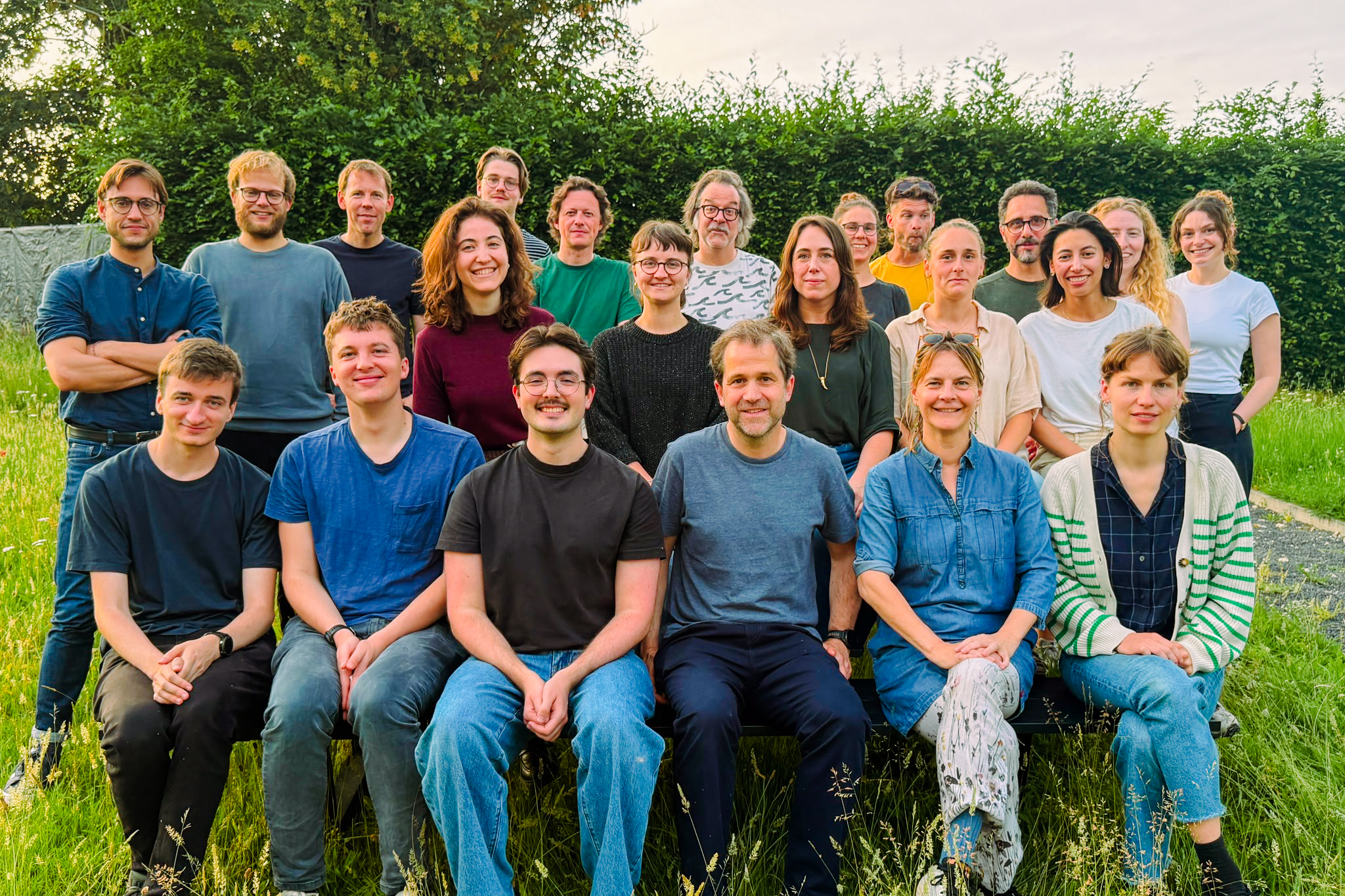
The Swifft Collective brings together four principal investigators, eight PhD researchers, eight professors and promotors, and two coordination professionals across ULB and VUB. Since October 2025 it has moved from its set-up phase into full operational capacity. Four research chairs anchor the work, each pairing conceptual development with hands-on PhD research, and joint PhD agreements are being put in place to support co-supervision across the two universities.

Sustainable Transformations and Wellbeing. This chair looks at how society can shift to more sustainable ways of living, and at who wins and who loses along the way (an approach known as political ecology). Its two PhD projects are taking shape around sustainable farming (agroecology) and the way we manage water, alongside fieldwork preparation, ethics approvals, public events, and collaborations between artists and scientists.

Sustainable Engineering. This chair builds smart computer models to make energy systems work better. One model predicts how much energy buildings need for heating and cooling; another helps keep electricity grids stable as they take on more renewable power (using methods called Bayesian machine learning and graph neural networks). The chair is developing data work with Sibelga and Brussels Environment, is exploring a collaboration on district heating, and has had its first conference paper accepted.

Decarbonisation and Justice. This chair asks how the move to a low-carbon society can be fair. It looks at the wealthiest, highest-emitting groups (often called polluter elites), at living well with less (sufficiency), and at what makes a transition just. Its two PhD projects examine how these high-emitting elites view their own responsibility, and the ways wealthy people choose to redistribute their resources.

Decarbonisation and Finance. This chair works out how to pay for the shift to a low-carbon economy, bringing together government policy, private investment, and the way the financial sector handles climate risk. Recent work includes a high-level seminar on climate, risk and finance that gathered 35 stakeholders, along with mapping the key players, preparing interviews, and writing early research papers.
Current status of the project

1
Research programme
All four chairs are operational with eight PhD researchers on board. The Collective has produced 25+ contributions to conferences, workshops, and training programmes. Sustainable Engineering has had its first conference paper accepted, and Decarbonisation and Finance ran a high-level seminar on climate, risk and finance with 35 stakeholders.
2
Islands of Hope
Seven action-oriented seed-funded projects have all moved from design into implementation. Most are now in data collection and early analysis. One has already held a public forum on energy sharing in Brussels (around 70 participants). A mid-term monitoring milestone is set for 19 May 2026, supported by a coaching cycle of four sessions in 2026.
3
Infrastructure (DecarbonLab)
The DecarbonLab will give the Collective a physical base at Usquare, the shared VUB-ULB site on a former military complex. An architectural competition drew 29 proposals; three finalist teams are now being shortlisted, with a co-design phase starting in August 2026.
4
Communication & outreach
The launch event at Flagey (December 2025) drew 500+ participants. The Collective has held 5+ events in 2026 and built an audience of 400+ newsletter subscribers and around 500 LinkedIn followers. Partnerships are active with Ohme, REScoop, and the City of Brussels, alongside engagement with EU-level initiatives such as the New European Bauhaus.
5
Strategic development
The Collective is preparing the BrIAS international programme (2027-2029), which will host 20-30 international fellows. An arts-and-science axis is taking shape, including a Horizon Europe proposal on “Artistic Intelligence” with Ohme and contributions to the Eco-Stories exhibition.
6
Challenges & lessons learned
As a cross-institutional, transdisciplinary collective, the main challenges are the administrative complexity of joint PhDs, coordination across two universities and their systems, making transdisciplinary work happen in practice, and scaling activities without overloading researchers. These are being addressed through stronger coordination, shared tools, and external facilitation.

A timeline of the project developments

Dec 2024
Programme announced (ULB, VUB and Helios Foundation)
Oct 2025
Full operational capacity: four chairs and eight PhDs active
Dec 2025
Launch event at Flagey gathers 500+ participants
19 May 2026
Islands of Hope mid-term monitoring milestone
2026-2027
Empirical and fieldwork phases; first joint publications
2027-2029
BrIAS international programme hosts 20-30 fellows
Around 2030
Five-year programme concludes (end date to confirm)

Expected impact

Research

Eight PhD trajectories and the first joint publications across engineering, sustainability transformation, justice, and finance, feeding a transdisciplinary research platform for Belgium and Europe.

Practice

Seven Islands of Hope projects delivering real-world decarbonisation experiments with documented outcomes, connecting research to citizens, practitioners, and field actors.

Infrastructure

The DecarbonLab at Usquare as a shared space for interdisciplinary research, experimentation, and public engagement.

Policy

Concrete inputs to Belgian climate, finance, and just-transition policy, reinforced by the BrIAS international programme and EU-level engagement.

Related projects

VUB STEAM Academy

Read project

Links